
Reliable yacht interior installation teams for superyacht and luxury marine projects
Reliable yacht interior installation teams forsuperyacht and luxury marine projects
YACHT INTERIOR EXPERTS
Luxury yacht interior fitting contractor
(class A & class B areas)
A yacht build doesn’t lose time evenly. It loses it in one late area. And that one area drags everything scheduled behind it down with it.
Maredon exists to close that gap before it becomes a delay on someone else’s desk.
- Start small. New clients can begin with two people.
- Scale fast. A standard crew runs four, and grows further when the project's scope and duration justify it.
- Own the scope. Furniture, wall panels, and ceiling systems, fully installed on board.
- Skip the overhead. Employment, travel, accommodation, and tools are ours to manage, not yours.
You get the hands. We carry what sits behind them.
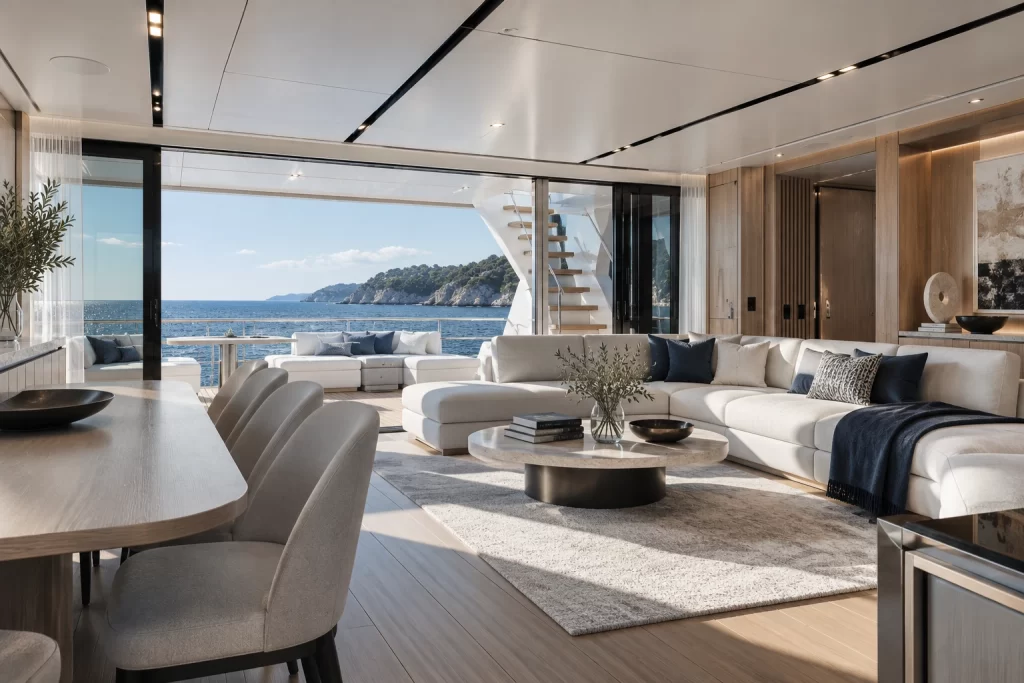
YACHT INTERIOR OUTFITTING
Yacht interior installation and outfitting scope
Two things end where Maredon begins: manufacturing, and the guesswork about who fits it on board. The scope is furniture, wall panels, and ceiling systems, installed inside your existing programme rather than a new one built around us. Your project stays yours. What lands in our hands is our responsibility, start to finish.
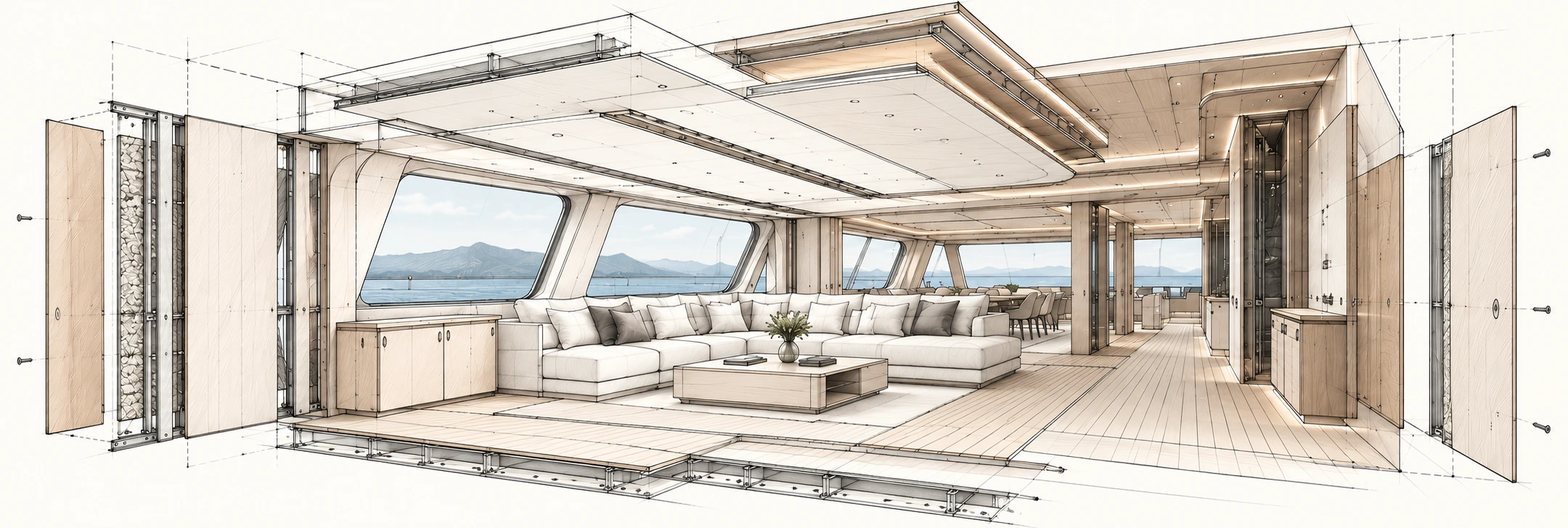
Yacht interior outfitting as part of the execution phase
Somewhere between "components arrived" and "interior is finished" sits the physical work most easily underestimated on paper. Maredon takes that stage on as a defined scope, working to the agreed project information.
Working in class A and class B yacht interior areas
Class A and Class B areas are judged at the seams, not the surfaces. Panels meet furniture, furniture meets trim, and ceilings close the room above. Maredon works to each area's requirements, where a small error becomes the first thing a guest sees.
Coordination with shipyards, yacht builders, and project managers
The best coordination barely gets noticed. Maredon reports directly to the people running the build, and the owner visits active projects to see progress firsthand. Problems reach a decision-maker in one step, not five.
YACHT INTERIOR INSTALLATION
Furniture, wall panels, and ceiling installation for yachtinteriors
On a scope sheet, furniture, panels, and ceilings are three separate line items. On the boat, they’re the same room.
Why that matters for you: one crew that already knows the space removes the handover between three separate contractors, each relearning the same cabin from scratch.
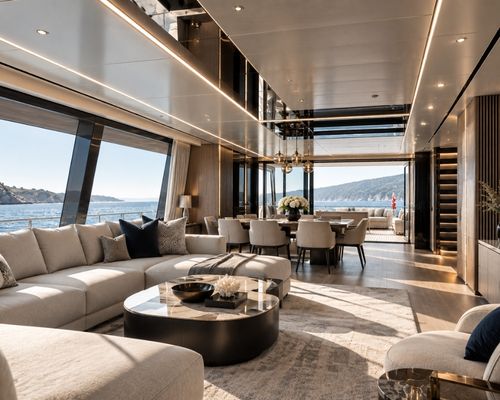
High-precision installation in confined yacht environments
More people in a yacht cabin don't always mean more progress. Tools, materials, other trades, and unfinished work are already fighting for space. Maredon sizes the installation crew to the room, so it helps the work instead of blocking it.
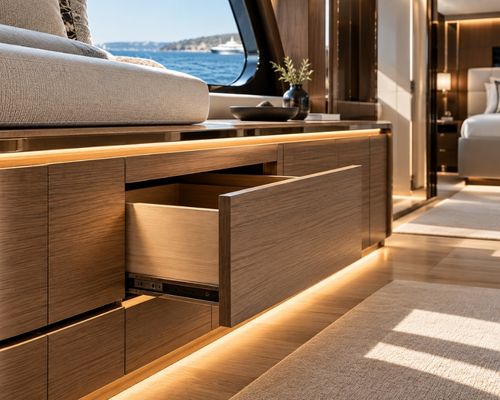
Yacht furniture assembly and on-board fitting
A piece can leave the workshop finished but still be far from finished on board. Maredon handles the final fitting in a space where it was never test-placed. Your workshop keeps building rather than sending its makers to site.
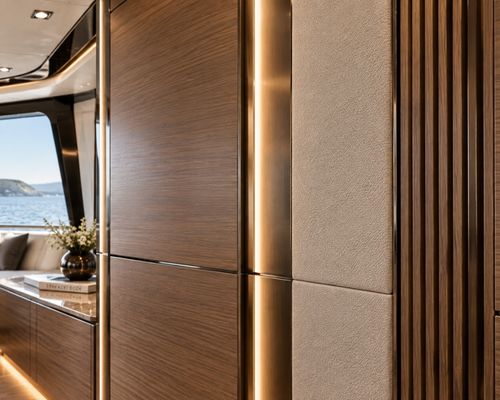
Bespoke wall panels and decorative interior elements
A panel never installs in isolation. Its edges meet doors, furniture, ceiling lines, trim, every other finished surface in the room, and one bad meeting point pulls more attention than the panel itself ever will. That's the actual skill here: reading the panel as part of the room, not as an object being fixed to a wall.
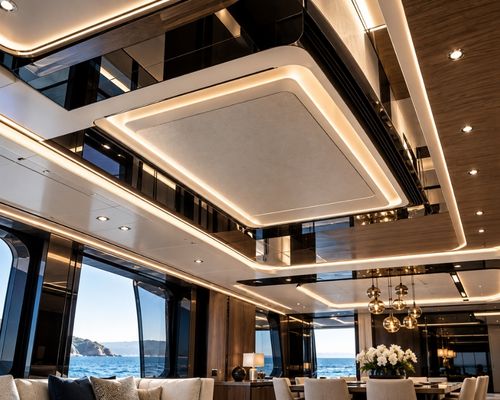
Drop ceiling installation in yacht and marine interiors
Ceilings go in late, once much of the room is finished. There's no room to turn that final stage into new work for someone else. Maredon fits ceilings in the same package as the furniture and panels below them.
Yacht carpentry and marine joinery
Yacht carpentry and marine joinery installation
Marine joinery shouldn’t cost a manufacturer its own production line. Maredon takes the on- board fitting stage off your hands entirely, furniture, panels, and ceiling elements installed at the yacht or shipyard, while your workshop keeps building.
One outcome for interior manufacturers: the order keeps moving at both ends, at once.
Experienced yacht carpenter teams for interior installation
Our most experienced specialists have over 10 years in the trade. Their past work includes M/Y Pure, Villa Victoria in Monaco, and yacht glazing for a German manufacturer. They know the environment before arriving on board.
Yacht carpentry and marine joinery execution
Yacht joinery, boat joinery, ship joinery, marine joinery: four names for much the same fitting stage. The practical question is what the project needs installed. For selected refits, we can also supply specified interior elements.
Working with yacht, boat, ship, and marine joinery systems
Yacht joinery, boat joinery, ship joinery, marine joinery, four names, largely the same installation stage described by four different companies. The practical question that actually matters to Maredon: is the interior supplied and ready for a fitting crew? If yes, that's where the conversation starts, whatever word you use for it.
YACHT INSTALATION SUBCONTRACTING
Yacht interior assembly subcontracting and turnkey support
Not every busy phase needs another contractor running a parallel process. Maredon
takes a defined yacht interior installation package within your existing programme,
whether the work lasts a month or several. We agree the scope, timing, and handover in advance, then manage the fitting and quality of our own work. The yard keeps
control of the build; the installation package has a clear owner.
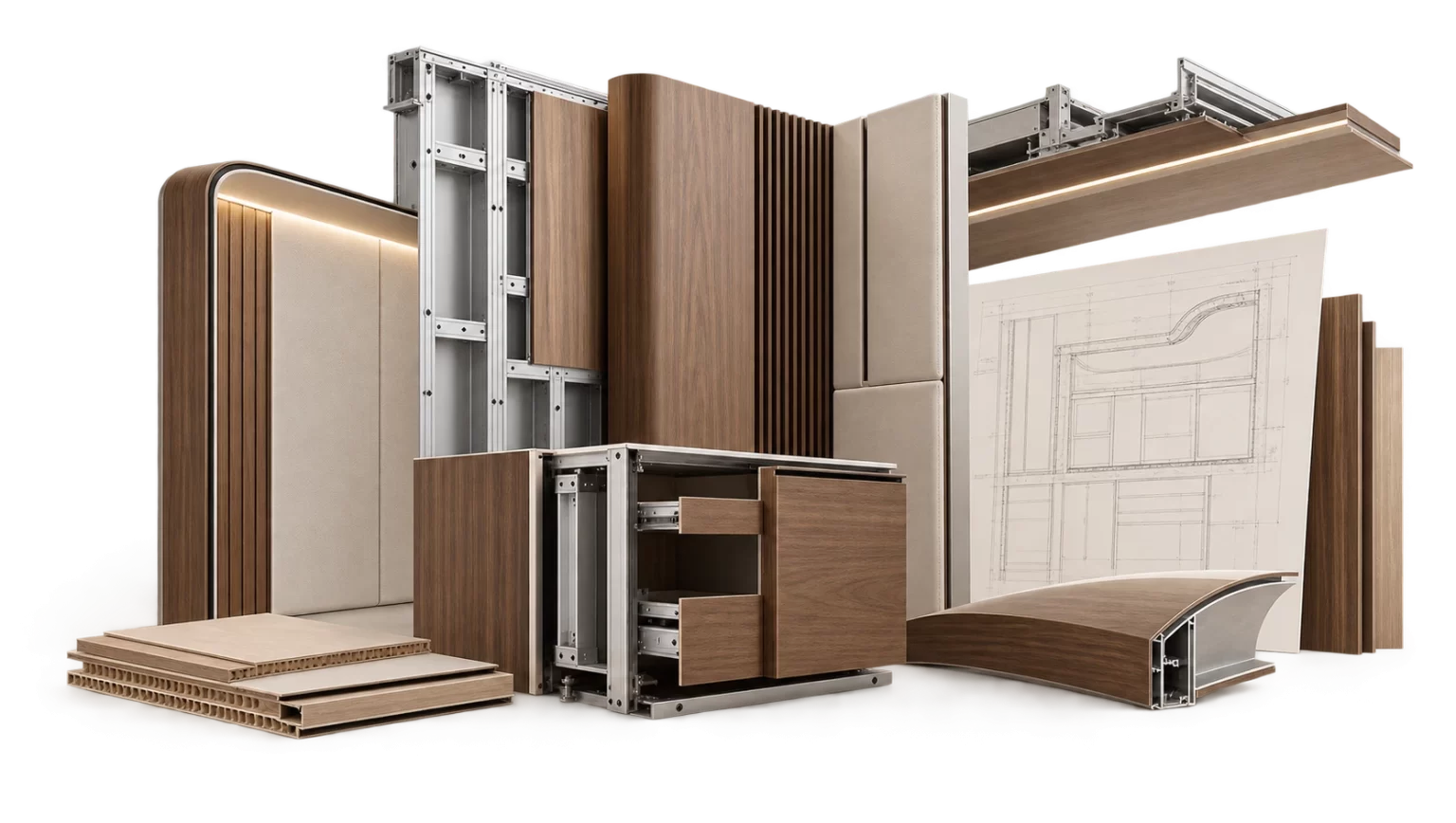
External yacht interior installation teams for shipyards
A shipyard programme can move faster than the interior fitting phase. Maredon takes on a defined installation package to help recover the schedule, working within the yard's sequence rather than introducing a parallel process.
Supporting yacht fit-out projects during peak execution phases
Peak pressure doesn't send a warning. A delivery slips, a window compresses, or several areas become ready at once. Maredon adjusts the installation sequence with you, and considers urgent or unusual requests case by case.
YACHT REFIT
Yacht refurbishment and refit projects
Refit work rewrites itself as it goes. A contractor who can’t adjust becomes the next bottleneck. Maredon handles defined interior refurbishment packages, from fitting furniture, wall panels, and ceilings to replacing interior details. Unlike an installation- only package, selected refits can also include the supply of agreed materials, panels, and furniture. The scope changes only when you approve it.
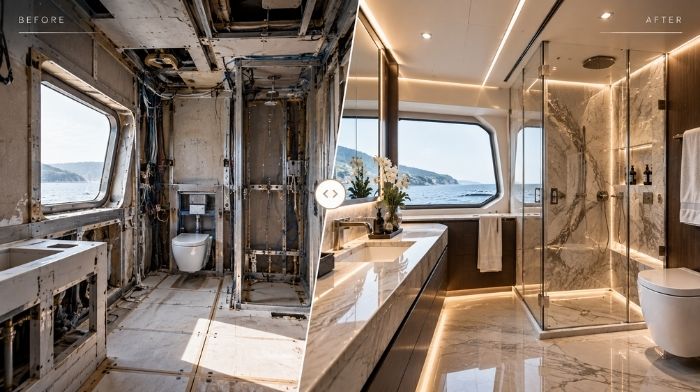
Interior installation support for yacht refurbishment
You don't have to hand over the whole refit to get the interior work moving. Maredon takes on the agreed installation package, working within the yard's sequence. If the scope includes supplied interior elements, we agree those with you up front.
Working within existing yacht interior structures
A refit is already in motion when we arrive. Access, sequencing, and completed finishes matter more than an idealised plan. When materials run late or the work changes, we adjust the agreed installation sequence with the project.
OUR PROCESS
How we work on yacht interior projects
No theatre. No bloated process. The job stays close to the people actually doing it.
Before the crew arrives, we align the scope with your team: sequence, deadlines, material timing, and the progress the wider build needs from us. Then we put the right crew size on it, not a default one.
- Once work is underway, here's what changes and doesn't:
- Need more people? The crew scales.
- Materials running late? We adjust and adapt.
- Job needs more time? We work through it with you, not around you.
- Want tighter handovers? Daily, weekly, or whatever rhythm you set.
- Direct, practical, close to the job. That's the whole method.
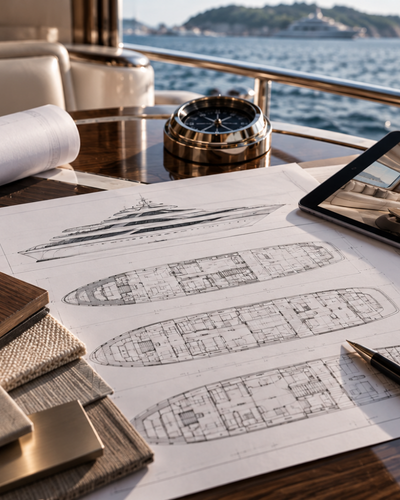
Project onboarding and technical scope review
Four questions get answered with your team before the crew starts: what needs fitting,what comes first, when materials arrive, and what progress the build needs. We put itin writing so fewer surprises appear once work is under way.
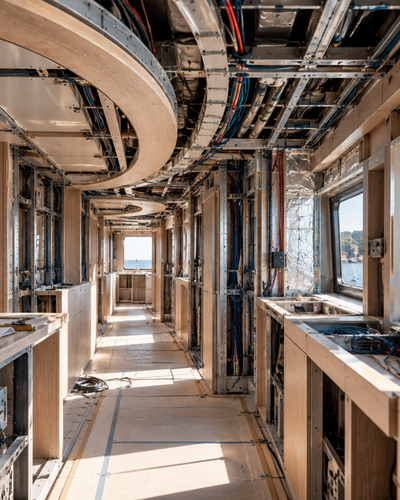
On-board coordination and communication
If something changes, you shouldn't have to chase three people for an answer. Ourcrew speaks directly to the people running the build. Maredon's owner also visitsactive projects to see what a status report can't show.
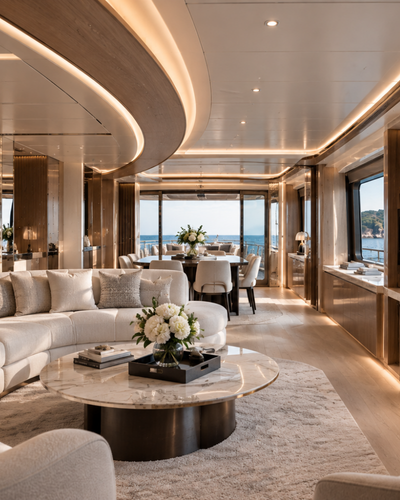
Quality control and handover in marine environments
Maredon doesn't decide when the work is good enough. You do.Our works manager follows quality throughout the job. Final acceptance stays entirely withthe client, on whatever handover rhythm fits the project.
The relationship in one line: we take responsibility for our people and our work. You stay in control of what gets accepted.
FAQ
If you can’t find an answer about your project here, don’t hesitate to contact us by phone or email.
How does a professional yacht fitout installation team integrate into ongoing shipyard and turnkey projects?
It enters with a clear scope, follows the build sequence already in place, and coordinates directly with the people already running the project, aligning to deadlines, material availability, site access, and expected progress, and adjusting when those conditions shift. Maredon works this way by default: joining an existing setup rather than building a separate process next to it.
When does it make sense to outsource interior work to external teams for yacht install phases?
When your own team can't absorb the installation workload without slowing something else down. Short term installation requirements, longer installation phases, urgent support, or a shipyard falling behind schedule all qualify. It also lets manufacturers keep their people in production instead of sending them to site. Maredon typically supports projects from around one month, with urgent or unusual situations considered on a case-by case basis.
How do subcontract installation teams reduce execution risk during complex yacht fitout projects?
By taking responsibility for a defined installation package without adding another process for the client to manage. The setup only works if four things are clear in writing:
1. Who owns the work
2. Who manages the crew
3. Who checks quality
4. Who accepts the finished result Maredon manages its own people, travel, accommodation, and tools.
Our works manager follows quality; final acceptance stays with you. If the scope or timing shifts, we adjust the installation plan with you rather than forcing you to rebuild the wider programme.
What is typically included in a full yacht install execution scope for interior works?
Furniture assembly and fitting, wall panel installation, and ceiling system installation on board. The exact package depends on the project, but responsibilities should be locked down before work starts, with quality checks and handover following an agreed process throughout.
Electrical and plumbing stay with the relevant trades. Maredon's core focus is interior fitting, with specified materials and components also available for selected refits.
How is coordination handled between shipyards, contractors, and external teams during yacht install operations?
Around a shared plan for what happens, when it happens, and what the wider build needs next. With Maredon, that sequence gets agreed with the client around deadlines, material deliveries, and required progress, and adjusted with the people running the project the moment any of that shifts.
What documentation and technical information are required before starting a yacht fitout installation phase?
The essentials, confirmed before the crew starts:
● Scope — what Maredon is expected to install or, for selected refits, supply
● Drawings & specs — the approved documents the crew installs to
● Sequence — which areas come first
● Timing — when each stage needs to be ready
● Materials — when they're expected on site
● Progress — how much the wider build needs from the crew, and how often work
gets reviewed and accepted
That's enough operational clarity to plan the crew around the real build, not a hypothetical
one.
What are the main challenges when performing interior works during yacht install in confined marine environments?
Not enough room for wasted movement, oversized crews, or a plan that can't bend. Three situations come up constantly:
The space is ready, but not for four people. Maredon starts with two specialists instead of forcing a standard crew into a space too small for it.
Materials arrive late. The original sequence stops working. Rather than waiting it out or forcing the old plan anyway, the work gets adjusted with the people running the project.
Another area suddenly needs installation work. We agree any change to scope or sequence without making the contractor rebuild the entire programme.
In tight yacht interiors, that flexibility is the actual job. Lean crew, direct communication, quality under the supervisor's eye, while the work keeps moving regardless.
How are quality control and precision ensured throughout the yacht install process on board?
By checking quality during the job, not only at the end. Maredon's works manager follows quality throughout installation. The client keeps the final say on acceptance, with handover on a daily, weekly, or otherwise agreed cycle.
That structure lowers risk in a few concrete ways: issues get caught before they spread into the next stage, the client never loses control of what's accepted, and quality responsibility stays clear on both sides throughout.
Maredon checks the work. The client decides when it's good enough to accept.
How do turnkey yacht interior contractors benefit from external teams specializing in yacht fitout execution?
A defined installation package, without another workforce for the client to manage:
● Clear execution responsibility — Maredon takes on the agreed installation work.
● Flexibility when plans change — late materials, longer work, or changes in scope get worked through with you.
● Project logistics handled — Maredon arranges its own travel, accommodation, and
tools.
● Clear quality ownership — our works manager follows quality throughout.
● Client control stays intact — final acceptance remains with you.
● Internal teams stay protected — your people keep working on their existing
assignments.
For a turnkey contractor, that's room to protect the programme without another process to manage.
When should shipyards consider flexible subcontract support during intensive yacht install periods?
Before the gap becomes a delay, not after. Watch for:
● Progress starting to slip against the build schedule
● A short-term installation package needing specialist execution
● Late materials compressing the remaining installation window
● An urgent scope the existing team can't absorb
● A longer installation phase requiring a dedicated subcontracted scope Maredon can start with a small crew and scale as the workload grows, which only works if the call happens early enough to matter.
How can experienced installation teams improve timelines and delivery confidence during yacht install projects?
By keeping three things under control at once: capacity, changing site conditions, and quality. Maredon starts small and scales as the workload demands. If materials are delayed or the programme shifts, the team adjusts with the project rather than waiting for the original plan to come back into view, work that's easier to do without a learning curve when specialists already carry 10+ years in the trade. Quality gets followed throughout by Maredon's works manager, with the client accepting completed work on a daily, weekly, or otherwise agreed cycle, regular visibility instead of a surprise at the finish line.
What factors should be evaluated when selecting a subcontractor for yacht fitout interior installation works?
Look beyond the project price. Check for:
● Real hands-on experience — not just a claim of it.
● A crew model that actually fits the job — able to start lean and grow, not fixed at one size.
● A genuinely clear scope — no ambiguity about what sits with the subcontractor.
● Actual flexibility — late materials or scope changes shouldn't stall the work.
● Active quality ownership — someone following the work daily, with final acceptance staying yours.
● Direct communication — problems reaching people who can act on them, not a
queue.
● Logistics fully handled — travel, accommodation, and tools, none of it landing on your desk.
A good subcontractor removes pressure from the project. It takes responsibility for a defined part of the work.
TRUSTED COLLABORATIONS
Our Partners
We work alongside leading interior manufacturers, turnkey project companies, and specialist marine outfitters across Europe.

About
Maredon delivers yacht interiors, land-based fit-out and furniture assembly as defined installation packages. Work is planned around your scope, schedule and material timing.
Company
Quick Links
Copyright © 2026. All Rights Reserved. MAREDON